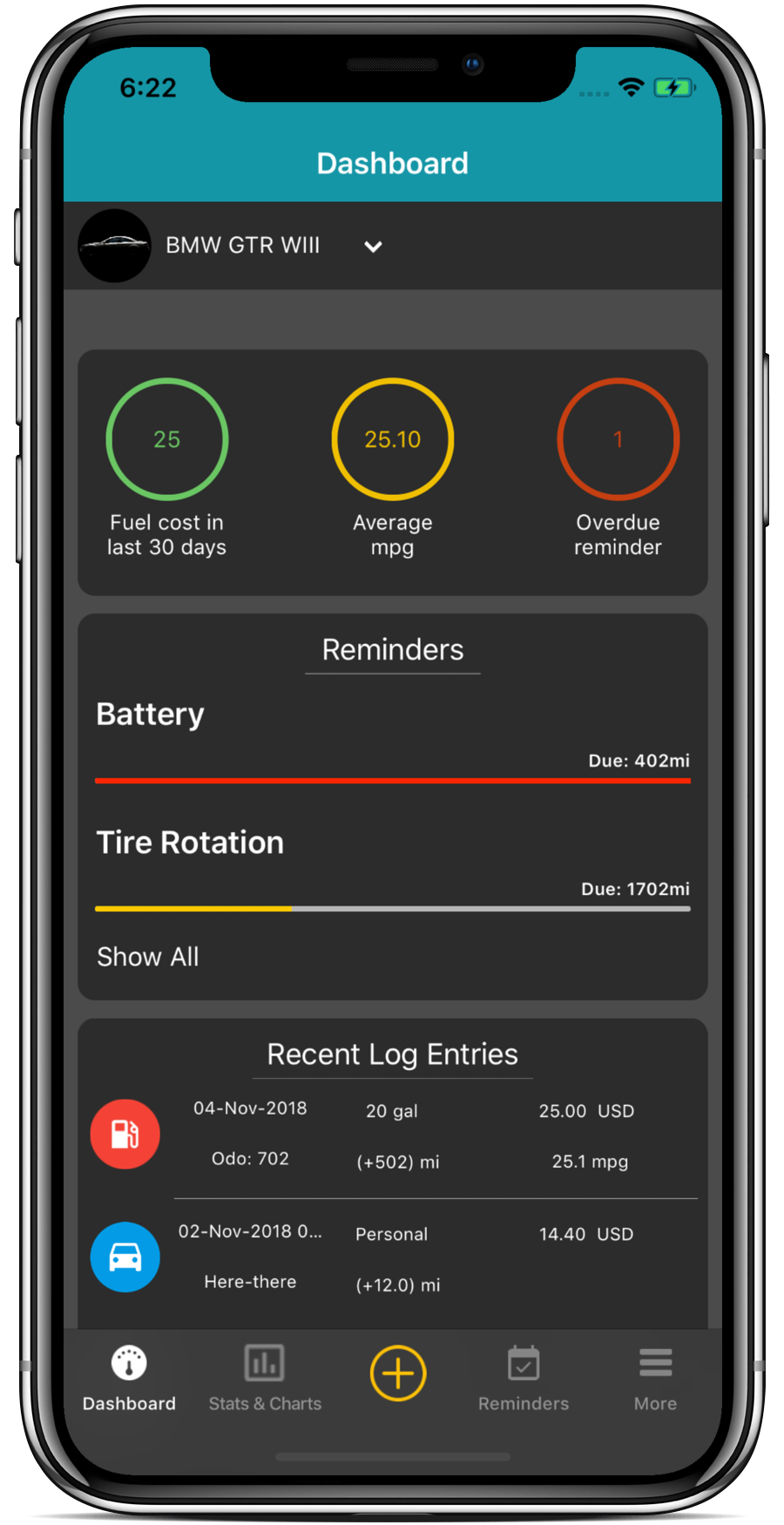
Record fill-ups for all your cars and monitor your car’s efficiency.
Need to track business mileage? Just start auto trip and we will track all your trips in the background whenever you are on the move.
Don’t lose sight of your maintenance and services. Log your services and we will remind you when its due.
Know your vehicle's running costs and plan for your expenses.
Sign into the cloud and get easy access to all your data from anywhere and any device.
Run your reports or schedule them weekly or monthly to know more about your fill-ups , mileage and expenses.
Kyōdai no Aida (Between Siblings) Director: Takashi Toyoda (known for Alto Voice , a 2021 drama about a high-pitched singer — hence “alto”) Theme: Adult brother and sister, separated in childhood, reunite and develop an emotional and semi-erotic bond. Production: Low budget, shot in 12 days. Casting call: Posted on “Nihon Eiga Senka” board — requested two leads willing to simulate incest. Received 200 applications (“para calls” = those calls).
Selected as the opening film of the “Top Tier” section at the Osaka Asian Film Festival 2025 (official statement: “We present this uncompromising work in its world premiere – a top selection from over 800 submissions”). film semi incest jepang para calls alto official premier top
Below is a long, structured article suitable for a blog or media analysis site. Introduction: A Taboo Genre with Artistic Pretensions Japanese cinema has long walked a fine line between provocative art and outright exploitation. Among its most uncomfortable subgenres is the so-called "semi-incest" film — a category where fictional narratives explore incestuous relationships (usually between siblings or a parent and adult child) without explicit hardcore sex, hence the “semi” (softcore) label. These films are not mainstream, but they have a dedicated following, particularly in niche home-video markets and certain international film festivals that champion transgressive cinema. Kyōdai no Aida (Between Siblings) Director: Takashi Toyoda
While not for everyone, these films exist at the intersection of exploitation cinema and arthouse provocation. They follow strict legal guidelines, rely on independent casting calls, and occasionally taste legitimate festival glory. As long as there is demand for boundary-pushing fiction, Japanese “semi-incest” films will continue to have their small, controversial place in global cinema. Disclaimer: This article discusses fictional cinematic themes. I do not endorse or promote real incest or any illegal activity. The keyword interpretation is based on linguistic analysis and cultural context. Received 200 applications (“para calls” = those calls)
In recent years, calls have gone digital via like Motion Gallery or PIA Film Festival’s talent matching. So, “para calls” may mean “calls for participants (para peserta)” in Indonesian — fitting given the keyword mix. 4. Case Study: A Fictional “Top Official Premiere” Example Let’s construct a realistic scenario based on actual Japanese film patterns:

Kyōdai no Aida (Between Siblings) Director: Takashi Toyoda (known for Alto Voice , a 2021 drama about a high-pitched singer — hence “alto”) Theme: Adult brother and sister, separated in childhood, reunite and develop an emotional and semi-erotic bond. Production: Low budget, shot in 12 days. Casting call: Posted on “Nihon Eiga Senka” board — requested two leads willing to simulate incest. Received 200 applications (“para calls” = those calls).
Selected as the opening film of the “Top Tier” section at the Osaka Asian Film Festival 2025 (official statement: “We present this uncompromising work in its world premiere – a top selection from over 800 submissions”).
Below is a long, structured article suitable for a blog or media analysis site. Introduction: A Taboo Genre with Artistic Pretensions Japanese cinema has long walked a fine line between provocative art and outright exploitation. Among its most uncomfortable subgenres is the so-called "semi-incest" film — a category where fictional narratives explore incestuous relationships (usually between siblings or a parent and adult child) without explicit hardcore sex, hence the “semi” (softcore) label. These films are not mainstream, but they have a dedicated following, particularly in niche home-video markets and certain international film festivals that champion transgressive cinema.
While not for everyone, these films exist at the intersection of exploitation cinema and arthouse provocation. They follow strict legal guidelines, rely on independent casting calls, and occasionally taste legitimate festival glory. As long as there is demand for boundary-pushing fiction, Japanese “semi-incest” films will continue to have their small, controversial place in global cinema. Disclaimer: This article discusses fictional cinematic themes. I do not endorse or promote real incest or any illegal activity. The keyword interpretation is based on linguistic analysis and cultural context.
In recent years, calls have gone digital via like Motion Gallery or PIA Film Festival’s talent matching. So, “para calls” may mean “calls for participants (para peserta)” in Indonesian — fitting given the keyword mix. 4. Case Study: A Fictional “Top Official Premiere” Example Let’s construct a realistic scenario based on actual Japanese film patterns:

Simply Fleet is a simple and affordable software to help you track, monitor and analyse your fleet’s operations.