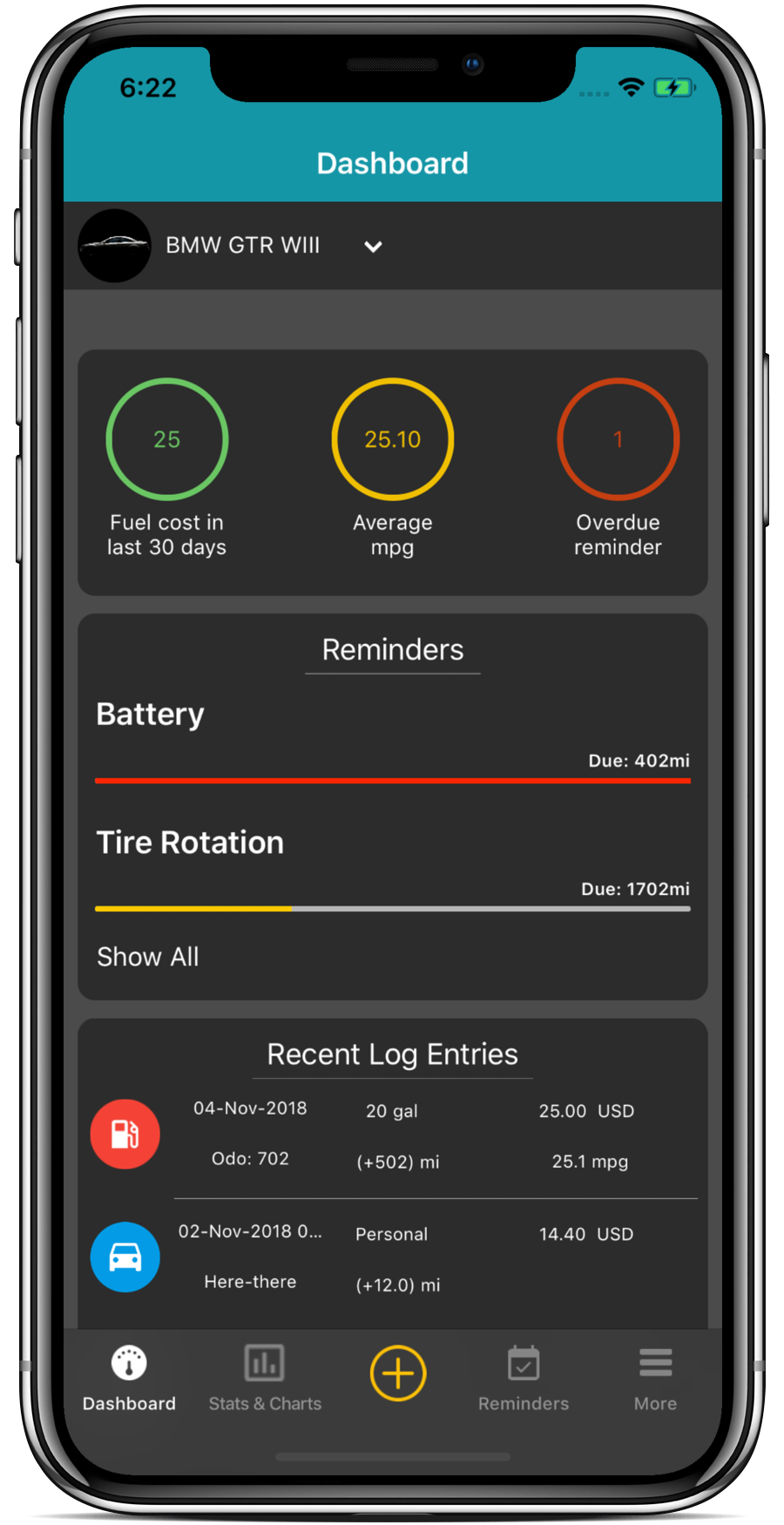
Record fill-ups for all your cars and monitor your car’s efficiency.
Need to track business mileage? Just start auto trip and we will track all your trips in the background whenever you are on the move.
Don’t lose sight of your maintenance and services. Log your services and we will remind you when its due.
Know your vehicle's running costs and plan for your expenses.
Sign into the cloud and get easy access to all your data from anywhere and any device.
Run your reports or schedule them weekly or monthly to know more about your fill-ups , mileage and expenses.
(Time saved per employee per week) x (Average loaded labor cost) x (52 weeks) + (Incremental revenue from reduced friction)
In the rapidly evolving landscape of digital transformation, acronyms often float around boardrooms with ambiguous meanings. However, when the term Project DPS surfaces, it usually carries significant weight. Depending on your industry—whether you are in software development, education, logistics, or gaming—Project DPS might refer to a specific internal initiative, a proprietary framework, or a new service offering.
Traditional KPIs measure activity (e.g., "Hours logged" or "Features shipped"). measures cohesion. For example, if your e-commerce site loads in 1.2 seconds (Digital) but your cart abandonment rate is 70% (Performance), the Synergy component of Project DPS would ask: Does the checkout flow communicate with the inventory API in real time? project dps
But beyond any single company's nomenclature, a new standard is emerging. For forward-thinking organizations, stands for Digital Performance Synergy . This article explores how a structured "Project DPS" methodology can turn fragmented digital assets into a unified, high-velocity revenue engine. What Exactly is Project DPS? At its core, Project DPS is a strategic initiative designed to bridge the gap between digital outputs and business outcomes. While legacy projects focused on simple automation (moving paper to PDF), Project DPS focuses on intelligent orchestration .
Furthermore, AI-driven synergy means predictive personalization. The system doesn't just know what a user did; it predicts what they will do next and pre-loads the assets. That is the ultimate goal of Project DPS: Conclusion: Is Your Organization Ready for Project DPS? Project DPS is not a software you buy. It is a discipline you adopt. It requires brutal honesty about your current fragmentation and the courage to tear down internal walls. (Time saved per employee per week) x (Average
If your current "digital projects" feel like they are running on treadmills—lots of movement, no forward progress—it is time to rebrand and refocus. Start your today. Not as a technical ticket, but as a business mandate.
In a world where attention spans are measured in milliseconds and switching costs are zero, the only sustainable competitive advantage is flawless flow. Master the synergy between your digital assets and your performance metrics, or watch your competitors do it without you. Are you launching a Project DPS initiative? Start with the audit. Map the friction. Then, automate the flow. Traditional KPIs measure activity (e
For a 200-person company, if Project DPS saves each employee just 45 minutes per week (no more manual data reconciliation), that is 150 hours per week. At a $50/hour loaded cost, that is $7,500 per week, or $390,000 annually—before counting increased revenue. As we look to 2025 and beyond, Project DPS is evolving. The next generation, sometimes called "DPS 2.0," incorporates generative AI agents.

(Time saved per employee per week) x (Average loaded labor cost) x (52 weeks) + (Incremental revenue from reduced friction)
In the rapidly evolving landscape of digital transformation, acronyms often float around boardrooms with ambiguous meanings. However, when the term Project DPS surfaces, it usually carries significant weight. Depending on your industry—whether you are in software development, education, logistics, or gaming—Project DPS might refer to a specific internal initiative, a proprietary framework, or a new service offering.
Traditional KPIs measure activity (e.g., "Hours logged" or "Features shipped"). measures cohesion. For example, if your e-commerce site loads in 1.2 seconds (Digital) but your cart abandonment rate is 70% (Performance), the Synergy component of Project DPS would ask: Does the checkout flow communicate with the inventory API in real time?
But beyond any single company's nomenclature, a new standard is emerging. For forward-thinking organizations, stands for Digital Performance Synergy . This article explores how a structured "Project DPS" methodology can turn fragmented digital assets into a unified, high-velocity revenue engine. What Exactly is Project DPS? At its core, Project DPS is a strategic initiative designed to bridge the gap between digital outputs and business outcomes. While legacy projects focused on simple automation (moving paper to PDF), Project DPS focuses on intelligent orchestration .
Furthermore, AI-driven synergy means predictive personalization. The system doesn't just know what a user did; it predicts what they will do next and pre-loads the assets. That is the ultimate goal of Project DPS: Conclusion: Is Your Organization Ready for Project DPS? Project DPS is not a software you buy. It is a discipline you adopt. It requires brutal honesty about your current fragmentation and the courage to tear down internal walls.
If your current "digital projects" feel like they are running on treadmills—lots of movement, no forward progress—it is time to rebrand and refocus. Start your today. Not as a technical ticket, but as a business mandate.
In a world where attention spans are measured in milliseconds and switching costs are zero, the only sustainable competitive advantage is flawless flow. Master the synergy between your digital assets and your performance metrics, or watch your competitors do it without you. Are you launching a Project DPS initiative? Start with the audit. Map the friction. Then, automate the flow.
For a 200-person company, if Project DPS saves each employee just 45 minutes per week (no more manual data reconciliation), that is 150 hours per week. At a $50/hour loaded cost, that is $7,500 per week, or $390,000 annually—before counting increased revenue. As we look to 2025 and beyond, Project DPS is evolving. The next generation, sometimes called "DPS 2.0," incorporates generative AI agents.

Simply Fleet is a simple and affordable software to help you track, monitor and analyse your fleet’s operations.