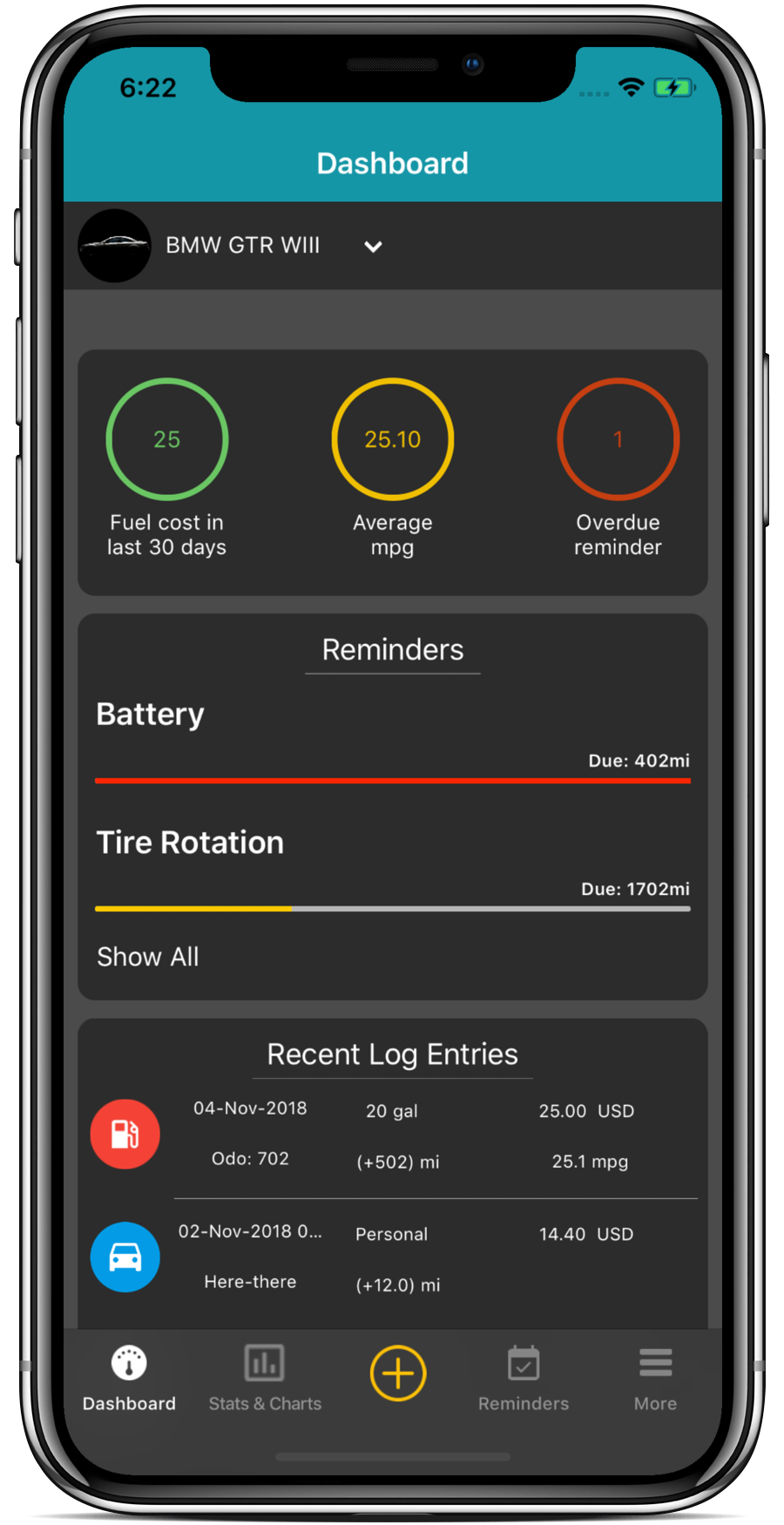
Record fill-ups for all your cars and monitor your car’s efficiency.
Need to track business mileage? Just start auto trip and we will track all your trips in the background whenever you are on the move.
Don’t lose sight of your maintenance and services. Log your services and we will remind you when its due.
Know your vehicle's running costs and plan for your expenses.
Sign into the cloud and get easy access to all your data from anywhere and any device.
Run your reports or schedule them weekly or monthly to know more about your fill-ups , mileage and expenses.
In the world of Computer-Aided Design (CAD), particularly within the ecosystems of AutoCAD and BricsCAD, VLX files have long been the standard for distributing protected LISP routines. For years, these compiled files acted as a "black box"—users could run the commands, but the source code remained hidden.
Imagine feeding a VLX into an LLM (Large Language Model) attached to a decompiler. The AI writes: "This VLX contains a loop that iterates through polylines, explodes them, and deletes any resulting arc with a radius less than 5. The logic is equivalent to a 'cleanup macro'." This is not science fiction; it is the roadmap for the next 18 months. If you are a CAD manager or automation engineer, yes, you should have one in your toolkit. Treat it like a fire extinguisher: you hope you never need to steal someone’s code, but if you lose your own legacy source code or need to audit a suspicious file, the new VLX decompiler is the only tool that can open the lock. vlx decompiler new
Ensure you have a backup of the original VLX. Never run a decompiler on the last copy of your file. In the world of Computer-Aided Design (CAD), particularly
Open the decompiler software. Drag and drop your MyTool.vlx into the interface. The new software will immediately analyze the bytecode signature. The AI writes: "This VLX contains a loop
The tool generates a .lsp file and a folder containing .dcl files. You open the LSP in Visual Studio Code. If the tool is high-quality, you will see:
In this comprehensive guide, we will explore what the new VLX decompiler technology is, how it works, why it is causing such a stir, and whether you should use it for legacy recovery or security auditing. Before diving into the decompiler, we need to understand the target. A VLX file (Visual LISP eXecutable) is a compiled format introduced by Autodesk in the early 2000s. It contains one or more LISP routines, Dialog Control Language (DCL) files, and compiled C++ code (FAS).
However, the landscape of CAD reverse engineering is shifting. The release of the tools in 2023/2024 has sparked a major debate among developers, IT managers, and power users.

In the world of Computer-Aided Design (CAD), particularly within the ecosystems of AutoCAD and BricsCAD, VLX files have long been the standard for distributing protected LISP routines. For years, these compiled files acted as a "black box"—users could run the commands, but the source code remained hidden.
Imagine feeding a VLX into an LLM (Large Language Model) attached to a decompiler. The AI writes: "This VLX contains a loop that iterates through polylines, explodes them, and deletes any resulting arc with a radius less than 5. The logic is equivalent to a 'cleanup macro'." This is not science fiction; it is the roadmap for the next 18 months. If you are a CAD manager or automation engineer, yes, you should have one in your toolkit. Treat it like a fire extinguisher: you hope you never need to steal someone’s code, but if you lose your own legacy source code or need to audit a suspicious file, the new VLX decompiler is the only tool that can open the lock.
Ensure you have a backup of the original VLX. Never run a decompiler on the last copy of your file.
Open the decompiler software. Drag and drop your MyTool.vlx into the interface. The new software will immediately analyze the bytecode signature.
The tool generates a .lsp file and a folder containing .dcl files. You open the LSP in Visual Studio Code. If the tool is high-quality, you will see:
In this comprehensive guide, we will explore what the new VLX decompiler technology is, how it works, why it is causing such a stir, and whether you should use it for legacy recovery or security auditing. Before diving into the decompiler, we need to understand the target. A VLX file (Visual LISP eXecutable) is a compiled format introduced by Autodesk in the early 2000s. It contains one or more LISP routines, Dialog Control Language (DCL) files, and compiled C++ code (FAS).
However, the landscape of CAD reverse engineering is shifting. The release of the tools in 2023/2024 has sparked a major debate among developers, IT managers, and power users.

Simply Fleet is a simple and affordable software to help you track, monitor and analyse your fleet’s operations.